
How foreign associates choose a local trademark agent
For many IP firms, a large share of new filings arrives from correspondents abroad. Those firms rarely move work over fees alone. They stay with the agent who is easiest to work with. Here is what that means in practice.
Why this decides your growth
A correspondent firm in London, Munich or New York has a client who needs protection in your country. It does not know your office, your examiners or your language, so it chooses an agent it trusts and sends the instruction. If that goes well, the next instruction for the same client comes to you, and so do instructions for its other clients.
That makes every correspondent relationship worth far more than any single filing. It also means you are judged continuously, on every update you send. The good news: almost everything correspondents judge you on is under your control.
What correspondents look for
Ask partners who instruct agents abroad what makes them stay, and the same four things come up again and again.
1. Speed
How quickly you confirm an instruction, ask for what is missing and report the filing. A same-day acknowledgement with a clear list of what you still need (power of attorney, priority documents, a clearer logo) tells a correspondent their client is in good hands.
2. Visibility
Whether they can see where their client’s mark stands without writing to you. Every “any news on this?” email is a small sign that they cannot see the work. Correspondents remember which agents they never have to chase.
3. Reporting
How your updates look when they forward them to their own client. Your notice often travels straight on to the brand owner, so it represents the correspondent as much as it represents you. A clear, branded notice with the mark, references and next step reads as professional. A one-line email with a scanned letter does not.
4. Billing
Whether your invoices match what was agreed, in the currency they pay in, and can be approved without questions. Surprises on an invoice cost more goodwill than almost anything else.
What good looks like, in practice
Here is how a firm running IPBases covers each of the four.
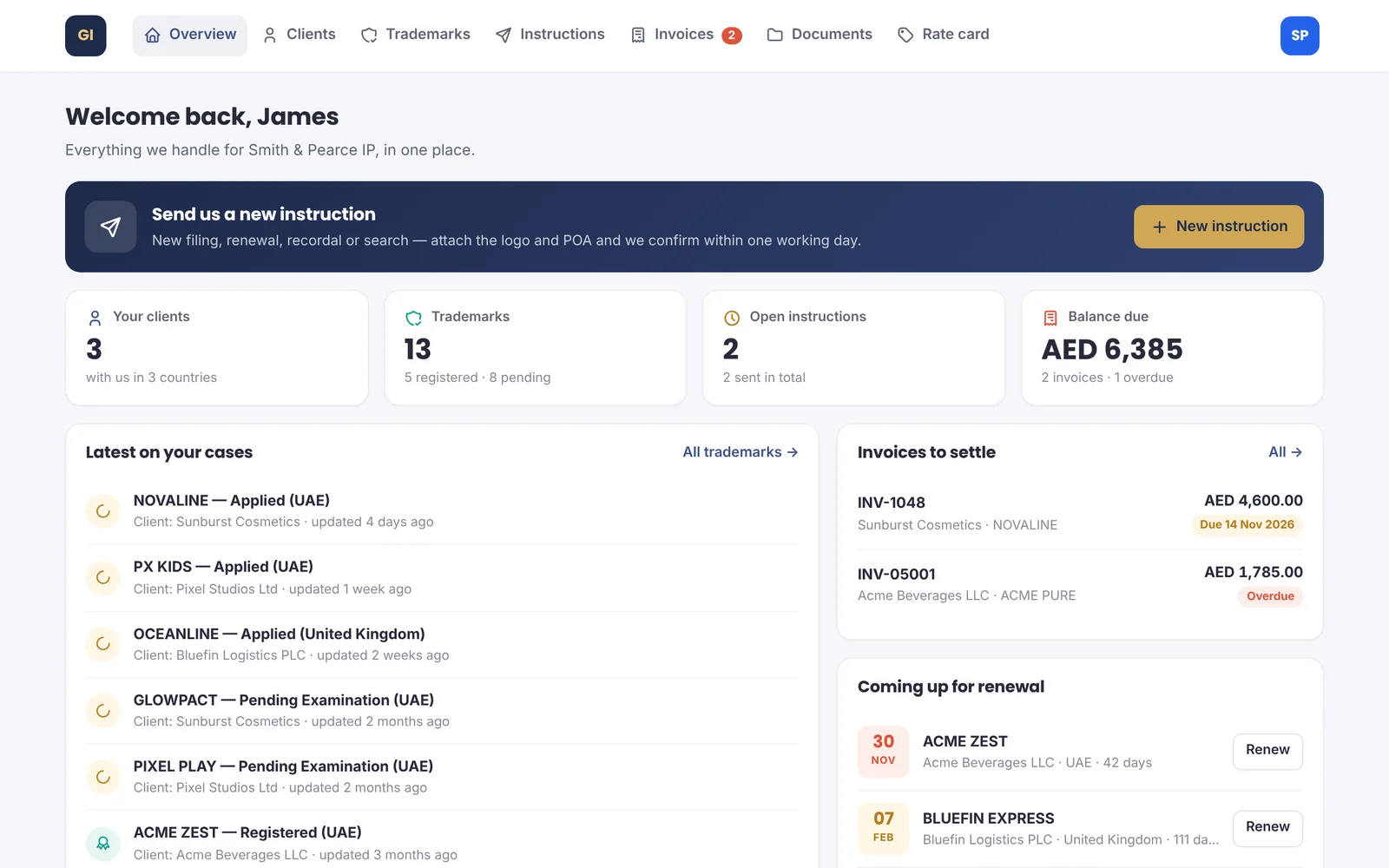
A portal of their own. Each correspondent signs in to an associate portal on your domain and sees only the marks they sent you: the stage of each one, what is due, renewals coming up and invoices to settle. They can send a new instruction with the logo and POA attached, and it lands in your team’s requests inbox rather than in one person’s email.
Updates that look like a large firm sent them. Filing, acceptance, publication and registration notices are written from the trademark record, in English or Arabic, on your letterhead and in your colours. At registration, a certificate in your colours is attached automatically.
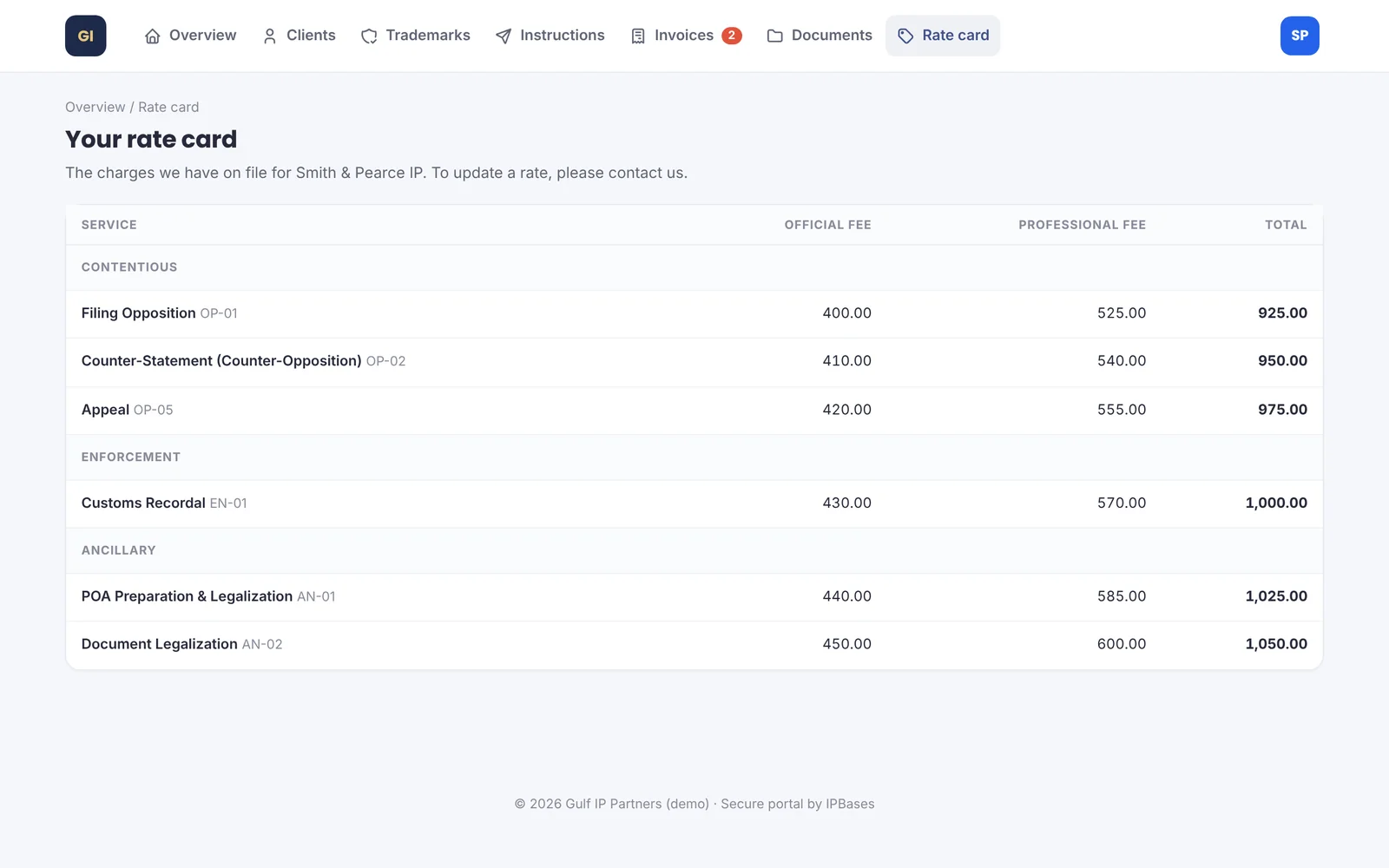
Billing they recognise. Invoices are addressed to the associate rather than the end client, in their currency, against a rate card they can see in their own portal.
A checklist for your firm
- Acknowledge every new instruction the same working day, with a list of anything missing.
- Give each correspondent a way to see status without emailing you.
- Use one consistent notice format for every milestone, with their reference and yours.
- Always state the next step and its deadline, even when nothing is needed from them.
- Send notices in the language their client needs, English or Arabic.
- Agree a rate card up front and bill against it, in their currency.
- Tell them about renewals early enough for them to get instructions from their client.
None of these depends on the size of your firm. They depend on having the work in one system that knows every mark, every deadline and every party.